Call us at any time (904) 377-5084
Call us at any time (904) 377-5084

Pool Screen Enclosures in Jacksonville
Pool Screen Enclosures in Jacksonville: What to Know
A pool screen enclosure — often called a "pool cage" — is a screened aluminum structure built over and around a pool, and in Northeast Florida it's nearly standard: the vast majority of Jacksonville-area pools have one. It keeps out bugs, leaves, and debris, cuts down on cleaning, blocks some of the harsh sun, and adds a safety barrier.
Expect a screen enclosure to add roughly $12,000–$30,000 to your pool project, depending on size, height, and style. If you're budgeting for a pool in Jacksonville, plan for an enclosure from the start — it's one of the most common "extras" that surprises homeowners when it's left out of an initial quote.
Why almost every Jacksonville pool has a screen enclosure
In a lot of the country, a screened pool cage is a luxury. In Northeast Florida, it's closer to a necessity — and here's why so many homeowners here add one:
Bugs. Florida has mosquitoes, love bugs, and no shortage of flying insects. An enclosure lets you swim and relax without them.
Debris and cleaning. Screens keep out leaves, pollen, and yard debris, which dramatically cuts how often you're skimming and cleaning the pool.
Sun protection. The screen blocks a meaningful portion of UV, making the pool area more comfortable in the Florida heat and reducing sun exposure.
Cooler water. By filtering that intense Florida sun, an enclosure helps keep the pool water itself from overheating — so your swim stays refreshing even in peak summer.
Privacy. With the right screen (privacy or solar mesh), an enclosure shields the pool area from neighbors' view, turning your backyard into more of a private retreat.
Safety. An enclosure acts as a barrier around the pool, which can help satisfy Florida's pool safety requirements (more below).
Cleaner water, less chemical burn-off. Less debris and less direct sun can mean more stable water and slightly less maintenance.
Longer pool life. Keeping debris out means your filter and pump don't have to work as hard, and the pool surface stays cleaner — which can help your pool and its equipment last longer.
Put simply: an enclosure makes a Florida pool far more usable and lower-maintenance, which is why it's the norm here rather than the exception.
What a screen enclosure costs
A pool screen enclosure in Jacksonville typically runs $12,000–$30,000, and where you land depends on:
Size — the footprint of your pool and deck area. Bigger enclosure, higher cost.
Height and style — a standard flat "mansard" roof costs less than a tall "dome" or "gable" style that gives more headroom and a more open feel.
Screen type — standard screen vs. no-see-um (finer mesh) vs. pet-resistant or privacy screen.
Structure and framing — heavier-gauge aluminum, wind-rated framing (important in hurricane country), and the color/finish.
Doors and features — number of doors, kick plates, and any custom touches.
Because it's a significant line item, it's worth confirming from the start whether a builder's pool quote includes the enclosure — it's one of the most common things left out, which makes a quote look lower than the real all-in cost. (See our questions to ask a pool builder.)
See the full picture in our Jacksonville pool cost guide.
Types of pool enclosures
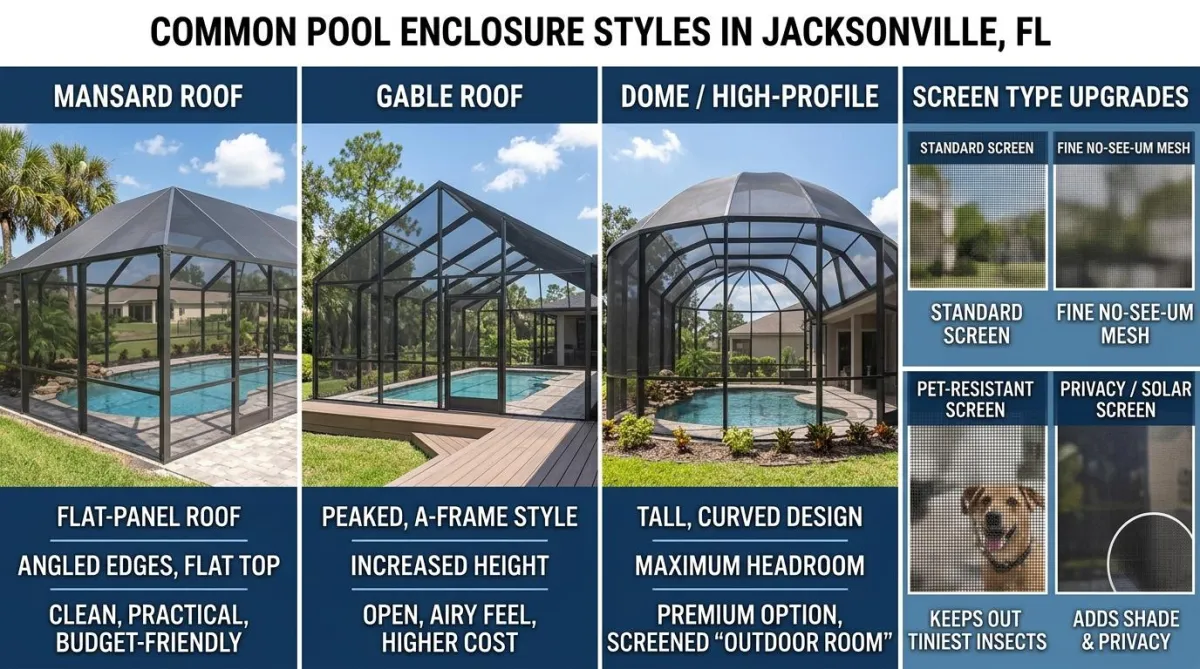
A few common styles you'll come across:
Mansard (flat-panel) roof — the most common and economical; angled edges with a flat top. Clean, practical, budget-friendly.
Gable roof — a peaked, A-frame style that gives more height and an open, airy feel; costs more.
Dome / high-profile — tall, curved or high-peaked designs for maximum headroom and a screened "outdoor room" feel; the premium option.
Screen type upgrades — standard screen, fine no-see-um mesh (keeps out the tiniest insects), pet-resistant screen, and privacy/solar screens that add shade.
The right style depends on your budget, how much headroom you want, and the look you're going for.
Screen enclosures and Florida's pool safety rules
Florida's Residential Swimming Pool Safety Act requires every new residential pool to have at least one approved safety barrier. A screen enclosure can serve as that barrier when it's built to meet the requirements (including a self-closing, self-latching door) — which is one more reason enclosures are so common here: they solve the bug/sun/cleaning problem and help satisfy the safety-barrier rule at the same time.
Your builder will make sure the enclosure meets code as part of the permit. More in our permits & HOA guide.
Do you need a screen enclosure?
Not strictly — plenty of Jacksonville pools are open-air, and some homeowners prefer the uninterrupted view and sky. But the majority add one, because the bug, debris, sun, and safety benefits are hard to beat in this climate. A practical way to decide:
Add one if you want lower maintenance, bug-free swimming, sun protection, and a barrier that helps with safety requirements — the typical Northeast Florida choice.
Skip it if you strongly prefer an open-air look, have heavy tree cover you'd rather work around, or want to keep the budget as lean as possible — just know you'll clean more and deal with bugs.
If you're on the fence, it's an easy thing to discuss with builders when you get matched — they can show you options and price them for your specific pool.
Screen Enclosure FAQ
How much does a pool screen enclosure cost in Jacksonville?
A pool screen enclosure typically costs $12,000–$30,000 in the Jacksonville area, depending on the size, height, style, screen type, and framing. A larger pool and deck, a taller roof style, or upgraded wind-rated framing all raise the price.
Why do Florida pools have screen enclosures?
Screen enclosures keep out bugs, leaves, and debris, block some of the harsh sun, reduce pool cleaning and maintenance, and can serve as a safety barrier. In Northeast Florida's climate, these benefits make enclosures nearly standard on residential pools.
What are the benefits of a pool screen enclosure in Florida?
Beyond keeping out bugs and debris, a screen enclosure blocks much of the harsh sun and UV, helps keep the pool water cooler, adds privacy from neighbors, reduces cleaning and chemical use, can serve as a safety barrier, and by keeping debris out can help the pool and its equipment last longer. Those combined benefits are why enclosures are nearly standard on Northeast Florida pools.
Is a screen enclosure included in a pool quote?
Not always — it's one of the most common items left out of an initial pool quote, which can make the quote look lower than the real all-in cost. Always confirm whether the enclosure is included, and get it itemized in writing.
Can a screen enclosure count as a pool safety barrier in Florida?
Yes, when built to meet the requirements — including a self-closing, self-latching door — a screen enclosure can satisfy Florida's pool safety barrier rule. This is one reason enclosures are so popular in the state.
What's the most popular type of pool enclosure?
The mansard (flat-panel) style is the most common and economical. Gable (peaked) and dome/high-profile styles cost more but offer more headroom and a more open, airy feel.