Call us at any time (904) 377-5084
Call us at any time (904) 377-5084

What Does a Pool Actually Cost to Own in Jacksonville?
What Does a Pool Actually Cost to Own in Jacksonville?
The monthly cost to own a pool in Jacksonville is usually modest once it's built — mostly a higher electric bill to run the pump, plus chemicals and occasional supplies.
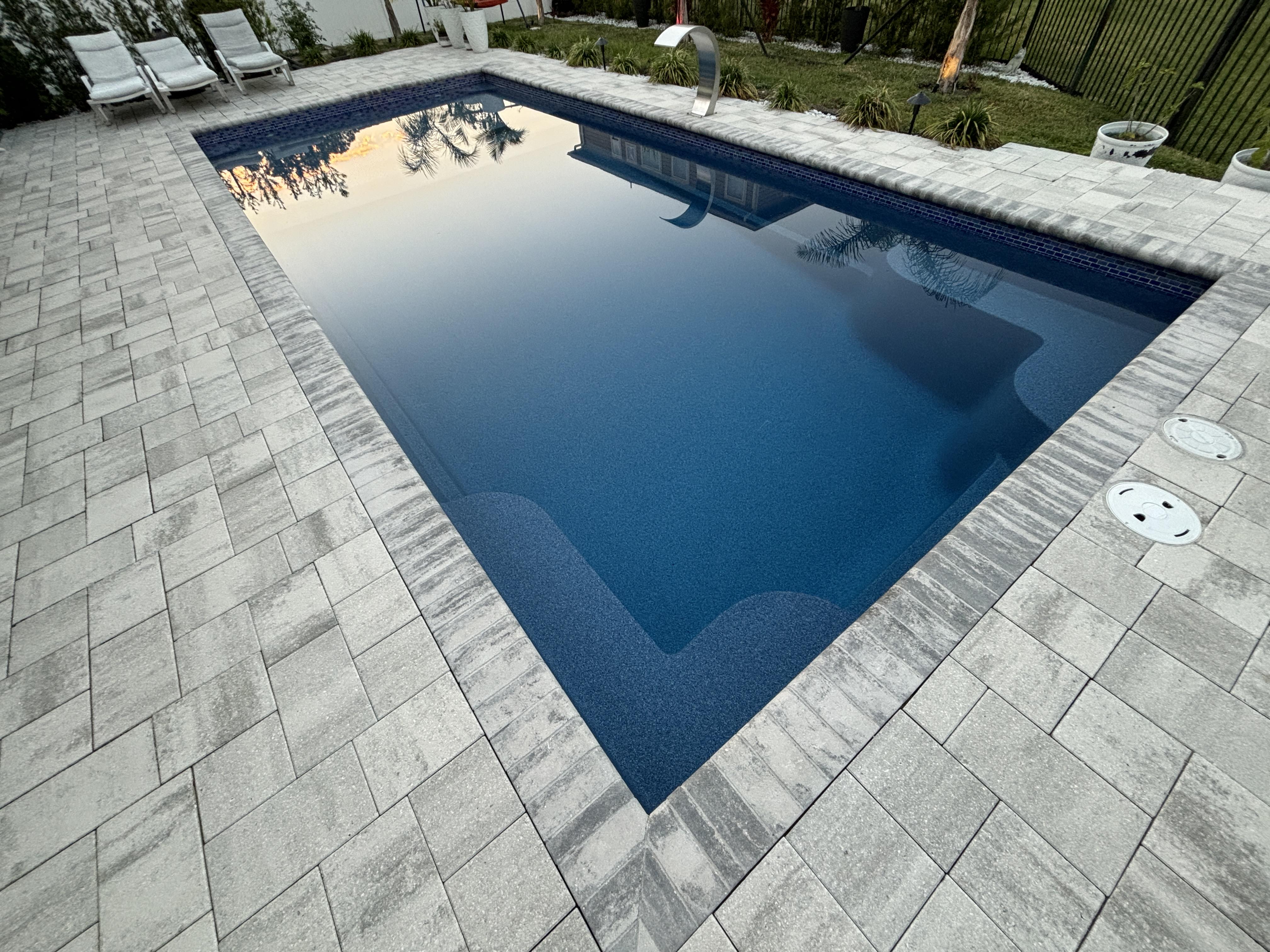
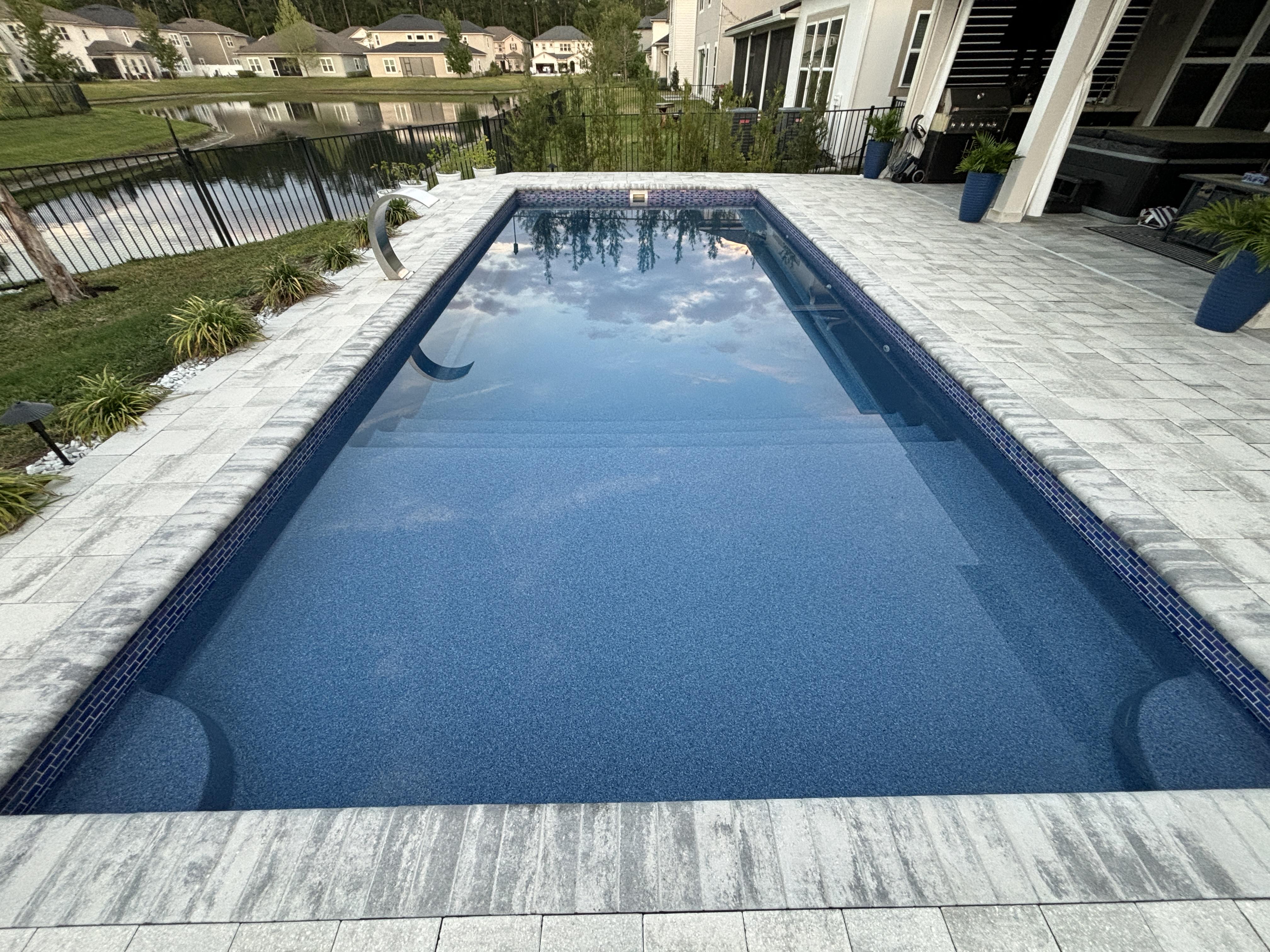
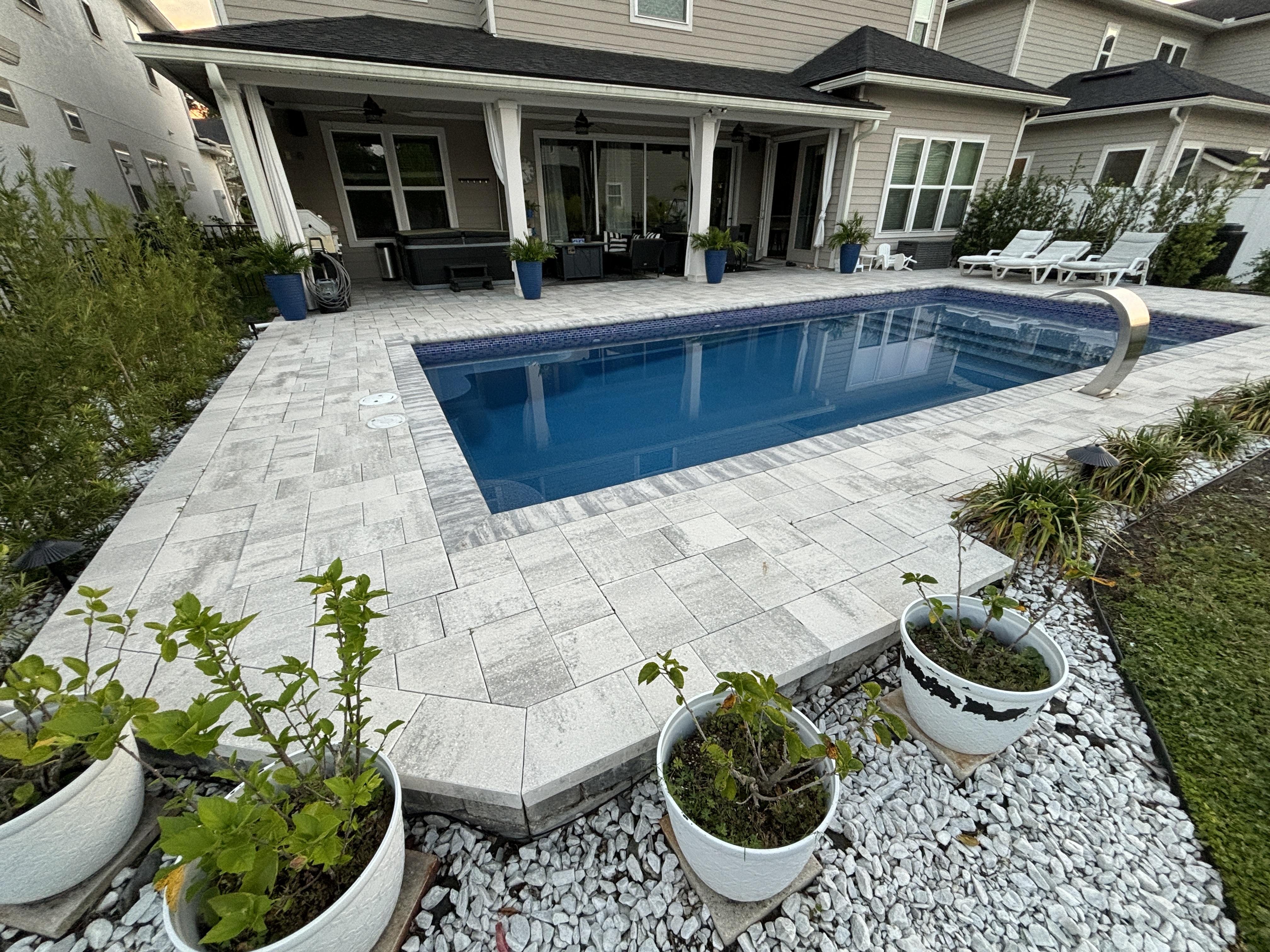
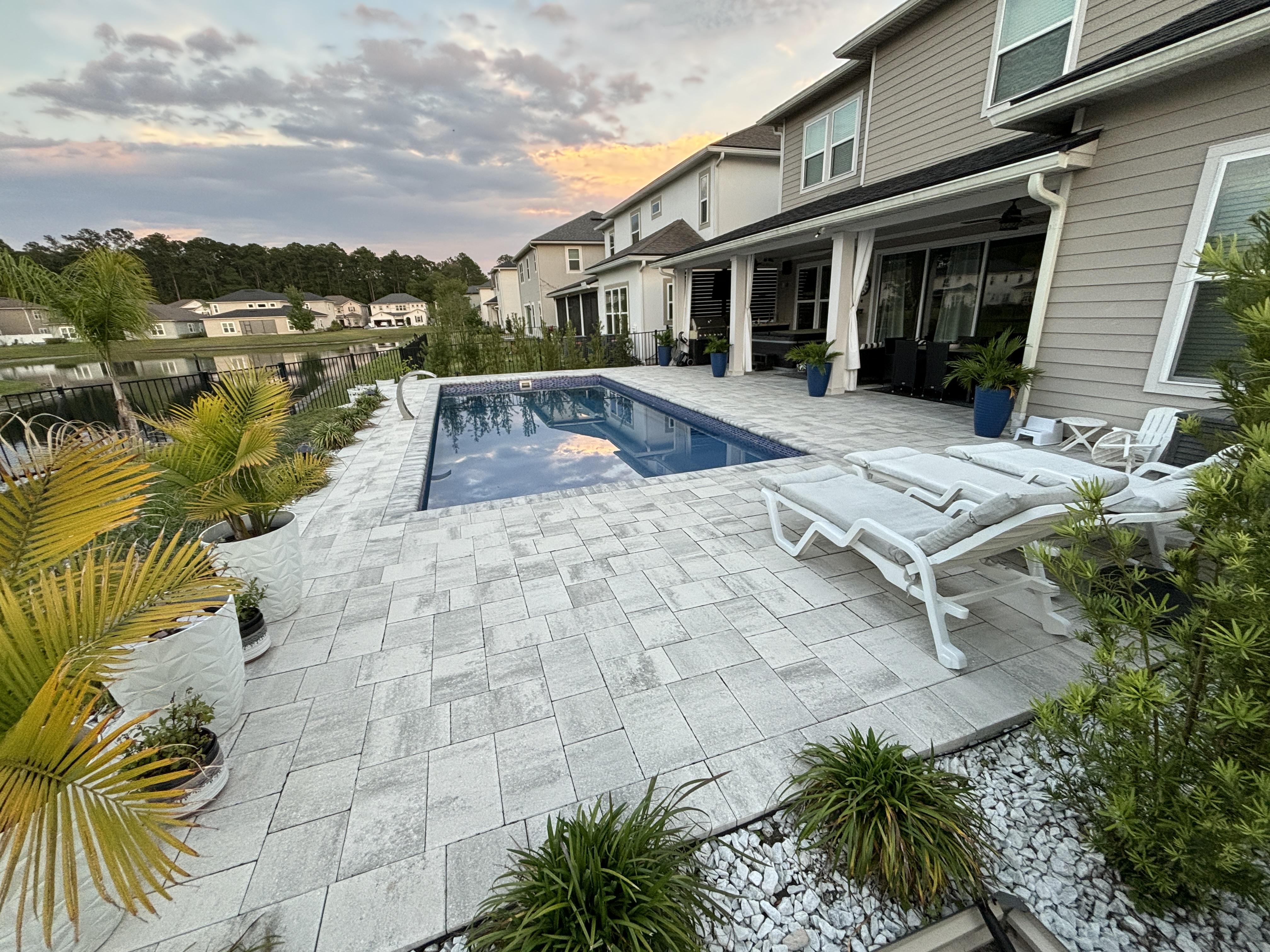
For a fiberglass pool, ongoing costs are especially low: because fiberglass doesn't affect water chemistry the way a concrete surface does, you use far fewer chemicals. In our own 4 seasons owning a fiberglass pool in Jacksonville, upkeep has come down to a handful of bags of pool salt a year (around $10 each), the occasional shock treatment, and a one-time robot cleaner — and the water stays clear almost all the time.
Gunite (concrete) pools are beautiful and fully custom, but they generally cost a bit more to maintain, since the surface needs more consistent chemical balancing (including acid) and periodic resurfacing over the years.
The real monthly costs, broken down
Electricity (the main ongoing cost). Running the pump and filter is the biggest recurring expense — it shows up as a higher electric bill rather than a separate "pool bill." A variable-speed pump keeps this lower. In a warm climate like Jacksonville, many people run their pool year-round, so it's a steady cost rather than seasonal. For an average pool, you can expect the added electric cost to run roughly $50–$100 a month, depending on your pump and how long you run it.
Chemicals. This is where the pool type makes a real difference (see below). For a salt-system fiberglass pool, it's mostly salt plus occasional shock. For gunite, expect more regular balancing chemicals, including acid to manage the pH that a concrete surface naturally pushes up.
Occasional supplies and service. Test strips or free water testing (local shops like Pinch A Penny test your water free), the odd replacement part, and — if you'd rather not do it yourself — a monthly pool service. Many fiberglass owners handle upkeep themselves because it's so light.
Longer-term. Gunite pools are typically resurfaced every 10–15 years (a few thousand dollars). Fiberglass pools don't need resurfacing. Vinyl-liner pools need a new liner every several years. Worth factoring into the true long-run cost.
Why fiberglass is the lowest-maintenance pool (our real experience)
We've owned a fiberglass pool in Jacksonville for 4 seasons, and the upkeep has genuinely been easy. Here's what it actually looks like:
Salt: we add pool salt roughly once every 2–3 months — more during swim season, less in the off-season — so about 4–5 bags a year at ~$10 a bag.
Shock: an occasional shock treatment, maybe once a month or every couple of months, based on a free water test (Pinch A Penny tells us what, if anything, we need).
Cleaning: we scrub the bottom every week or two, and run a robot pool cleaner we bought once on Amazon for around $300–$400. It cleans the sides and bottom on its own — genuinely easy.
The result: the water stays clear almost all the time. As long as it's clear, maintenance is minimal.
The reason fiberglass is so low-maintenance comes down to the surface: it's smooth and non-porous, so algae has a hard time taking hold and the water chemistry stays stable with far fewer chemicals. A concrete (gunite) surface is porous and naturally raises pH, so it needs more frequent balancing — including regular acid — to stay right.
Quick pool tier comparison
| Ongoing cost factor | Fiberglass | Gunite (concrete) |
|---|---|---|
| Chemical use | Low — smooth surface, stable chemistry Lower cost | Higher — porous surface needs more balancing + acid |
| Typical routine | Salt + occasional shock | Regular balancing chemicals |
| Resurfacing | Not needed Lower cost | Every ~10–15 years |
| Algae resistance | High (non-porous surface) | Lower (porous surface) |
| DIY-friendly | Very — many owners self-maintain | Doable, but more attention needed |
Gunite's tradeoff is worth it for many people — it's the only way to get a fully custom shape and size. This compares ongoing cost, not overall quality.
How to keep pool costs low
A few things that genuinely lower ongoing cost:
Choose a variable-speed pump — the single biggest lever on your electric bill.
Consider a salt system — less hands-on chemical management than traditional chlorine.
Use free water testing — local shops test your water free, so you only buy what you actually need.
A robot cleaner pays for itself in saved time and service calls.
Fiberglass, if it fits your design — the lowest-maintenance surface, hands down.
Monthly Pool Cost FAQ
How much does it cost to maintain a pool in Jacksonville?
Ongoing costs are usually modest — mostly a higher electric bill to run the pump, plus chemicals and occasional supplies. A fiberglass pool is especially cheap to maintain: often just a few bags of salt a year (around $10 each), occasional shock, and self-cleaning with a robot. Gunite pools cost a bit more to maintain because the surface needs more regular chemical balancing.
Is a fiberglass pool cheaper to maintain than gunite?
Yes, generally. Fiberglass has a smooth, non-porous surface that resists algae and keeps water chemistry stable, so it needs far fewer chemicals. Gunite's porous concrete surface raises pH and needs more frequent balancing, including acid, plus resurfacing every 10–15 years. Fiberglass doesn't need resurfacing.
What's the biggest ongoing cost of owning a pool?
Electricity to run the pump and filter is usually the largest recurring cost, showing up as a higher electric bill. A variable-speed pump significantly reduces it.
How much does a pool add to your electric bill in Jacksonville?
For an average pool, expect the added electric cost to run roughly $50–$100 a month, depending on your pump and how long you run it. A variable-speed pump keeps it toward the lower end.
Do I need a pool service, or can I maintain it myself?
Many fiberglass owners maintain their pools themselves because upkeep is so light — scrub occasionally, run a robot cleaner, add salt now and then, and shock as needed. Gunite pools are also DIY-friendly but need more consistent attention. A monthly service is optional if you'd rather not do it yourself.
How often do you add chemicals to a fiberglass pool?
In our experience owning one in Jacksonville, it's minimal — salt roughly every 2–3 months (about 4–5 bags a year) and an occasional shock based on a free water test. As long as the water stays clear, there's little to do.